
Replies: 2 comments 5 replies

-
|
Not completely sure what you're asking here? Are you asking for implementation details? Or general information on immutable data-structures? You mention 'immutable collections', are you talking generally, or about the immutable collections in language-ext, or the Microsoft ImmtuableCollections library? Some general info on the language-ext immutable collection types:
Immutable AVL treesSome of the collection types in language-ext use a self-balancing AVL tree as its backing store. They are:
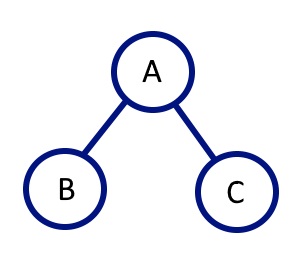
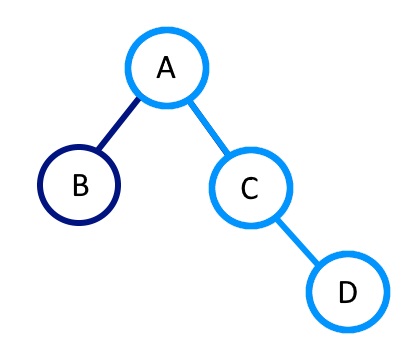
Immutable AVL trees work by only updating the nodes in the tree that are directly affected by an insertion or deletion.
If you have a root
This means that the total cost of insertion or removal is Iterating and reading of any of the immutable AVL backed structures will be as fast as doing so with the mutable versions in the BCL ( Note also that that all of these AVL backed types can be initialised with an Compressed Hash Array Map Trie (CHAMP)
The closest type in the BCL is
|
| Type | Add |
Cons | Insert(0,x) |
Enumeration |
|---|---|---|---|
Seq<A> |
29.5 ns / op |
20 ns / op |
10.0 ns / op |
List<T> |
11 ns / op |
10320 ns / op |
16.1 ns / op |
This is pretty amazing for an immutable, thread-safe, lock-free, type that can support appending and prepending with very similar performance benefits to List<T> as well as supports at-most-once lazy streaming. We're still looking at 33-50 million write operations per-second and enumeration that's faster than the mutable counterpart.
One thing to note is that Seq<A> also supports laziness. If you're enumerating a lazy sequence then you're looking at 54 ns / op, or about 18.5 million operations per-second. Once the lazy stream has been enumerated once then it is cached and will have the same performance as the table above.
Beta Was this translation helpful? Give feedback.

-
|
Sorry. English is not my first language. I am curious about implementation details of the various data structures in language-ext. AVL trees and CHAMP (cool. Mad respect!) is enough for me to know when I should use them. But Seq? Seq is backed by an array. Ok, now I know that. What happens if I have a Seq of huge items, take the tail or skip a few items and let the old reference be garbage collected. Are the unused elements cleared in some way? Is the Seq copied if I assign the tail to a different variable? These are perhaps dumb questions, but they are good examples of the kind of information I tried to find. I don't want to write code by guessing the performance characteristics of the code. Even the most general data structures have gotchas. Like, how is thread safety ensured? Does it limit conses to the same thread ID? If so, how does it work with async flows where you might end up on a different thread? These are the kind of questions I would like to be able to read about before having to figure them out when I already have 10k lines of code. Edit: oh, and that enumeration benchmark comparison, is that with foreach? That forces generation checks, and makes foreach on lists slow ( and to my knowledge, these check cannot be elided). If you know you are not mutating the list from under you, a regular for loop is a LOT faster. You can iterate over deep trees faster than you can foreach over a List Once again, mad respect for writing a CHAMP hashmap. I tried implementing them after reading the Steindorfer and Vinju paper in 2016, but could never figure the kinks out. Best regards |
Beta Was this translation helpful? Give feedback.

-
Yeah, it's quite hard to get it right and then to optimise it [to the extent I have done] makes the code pretty damn ugly. ///////////////////////////////////////////////////////////////////////////////////////////
//
// NOTE: Here be dragons! The code below is has been optimised for performace. Yes, it's
// ugly, yes there's repetition, but it's all to squeeze the last few nanoseconds of
// performance out of the system. Don't hate me ;)
//So, I hope I never need to change it!!! ;-)
With The benefit of the
It's not possible to take that mutable 'doubling array' concept directly into the immutable world, because it requires a backing-array that mutates in-place as the list grows. We don't want to have to clone the entire array on every I make a few assertions about working with lists (either mutable or immutable):
So, if head sharing and cross-thread head sharing is rare, but iteration and random access is common, then optimising for that makes sense. And optimising for appending and consing should be the priority on the mutation (transformation) side. That's When a Each So, other than the time taken in the There is an equivalent flag for The thing to be aware of: if you So, the call I've made here is that we are much more likely to be repeatedly adding to a constantly updating A same head var xs = toSeq(Range(0,1000000000)).Strict(); // Create a billion item sequence
var ys = xs.Add(1); // Very fast
var zs = xs.Add(1); // Needs to clone the original backing array before adding The other hits are the array doubling as the backing array runs out of space. The alternative is
The backing-array will be shared with the new instances. The only way the old backing array will be dropped is if subsequent usages of the tail or skip instances cause a grow-event or clone-event, orphaning the original reference. You could avoid this by cloning the instance. For example: var xs = toSeq(Range(0,1000000000)).Strict(); // Create a billion item sequence
var ys = xs.Take(1); // Even when `xs` goes out of scope, we still have a
// reference to a billion-item backing-array.
Seq<int> zs = [..ys.AsSpan()]; // Clones just the elements you're using
// allowing old references to collect
No, adding a destructor to
No.
Through atomic updates using
No.
The thread is completely irrelevant, as with all immutable data-structures, the only thing to be aware of is the cloning that happens when adding or consing to the same head (as detailed before). So, if you're creating 10 threads and sending the same Again, you could chose to use So pick your poison basically! Apropos of nothing, I have an idea for a potential improvement to It's a more complex structure, but might pay dividends. It is straying away from the core ideas of Optimisation is a bit of a nerd passion of mine (which may be surprising coming from someone so into pure functional programming). I am particularly fascinated by how to make pure functional programming as close to imperative performance as I can make it. So, I'm always open to ideas, as long as the surface remains elegant and easy to use. |
Beta Was this translation helpful? Give feedback.
-
|
This is the kind of info I wanted. Thank you. Had I started using this as a list in scheme or f sharp, that shared array backing would most certainly have me creating a memory leak soooner or later :) Thank you for taking the time to answer me. |
Beta Was this translation helpful? Give feedback.

-
|
Reading the questions and answers this discussion make me feel again like my first year in the software world but in a very good way. I feel like a child in a big world with rivers and lakes to explore. I mostly have practical experience because I just have the basic formal training from when I was in the equivalent of "high-school" in Chile, around 2014 to 2018. It was a "Telecommunications Medium Technician", but they did touch Programming topics, specificly web and I fell in love with it. After that I started working inmediatly in software development, and learn a lot until 2024, when a was feeling that I get too close to the celling. And maybe I did, but only in Chile. I throught that Vertical Slices Architecture, Domain Driven Design and a very Object Oriented Programming thinking was the answer to the even the most difficult/complex problems or workflows that my clients have send me. I think that I'm good enough in domain modeling, use case understanding, workflow composing, managing technical debt, making code that works, but also reads, feels and seems good. But I was feeling trapped, I was still feeling that the celling was to close to me. Until I get to this repository, and slowly the rules of the game change. Learn about functional programming, and more "formal-concepts" with this library is definitly an experience that I recommend. It may be a little light (it's a big one to me), but this discussion is a very good start-point to do a deep research of more "theorical" concepts (like concurrency, performance) and the ussual problems that programmers have when getting "las manos en la masa" and how more experienced people resolve those problems, for people in a similar context of mine this repository can be even game changing Merry christmas @louthy, you're an inspiration, and currently my inspiration. |
Beta Was this translation helpful? Give feedback.
-
@HernanFAR Wow, that's extremely kind of you, and your story is actually quite close to my own. Especially the moment of enlightenment. I think to a certain extent you need to have the scars and the war stories of real-world software engineering to have that enlightenment. You can think functional programming is right because of something you learned at college, or you can think it's right because suddenly everything starts to 'feel right' in real-world code. It takes a bit of time to get your brain to switch to FP thinking 'by default' after being in the imperative mindset for so long, but eventually you think FP first, and that's when everything becomes easier. In terms of performance work, that's completely different story, and very much my 'origin story' of writing 6502 assembler on my first 8-bit computer (2 Mhz CPU with 32k of RAM) back in 1985. You had to understand the machine at a fundamental level to get the best out of it. I took that into a career in the games industry where I needed to squeeze the last few nanoseconds out of a Playstation, or whatever console I was writing an engine for. You gain an intuition for performance tuning, outside of the standard Big-O complexity notation, which is hard to come by any other way than just doing ... over and over again. I do get a buzz from tweaking the algorithms and data-structures to squeeze the last bit of performance out of the machine. But, if the past two decades of building a 10 million+ line SaaS app has informed me of anything, it's that code complexity creeps up on you and is then quite hard to solve. The most important thing is to have maintainable code. Outright performance at the expense of maintainability is often a fools errand. Obviously, with a library like this, I need to try and achieve both... which isn't always easy! But hopefully my effort translates into more maintainable code for everyone that uses this library, it's what I started the project for. Anyway, thanks again for the kind words. Merry Christmas to you too 👍 |
Beta Was this translation helpful? Give feedback.

-
|
Yeah, a library performance is pretty important, but maintainable code is even more. Thats what I like about this library, is so full of small and-not-so-small yet powerful features that can be composed in million ways! My brain just does not stop giving me ideas of what can I do, and I like that I'll feel again the complexities of making something by myself soon. I'm learning Language-Ext not only because of Functional Programming, is because I was developing a framework to my company. It's specialized in the way that we work in my company using dotnet, so... kinda like the afore mencioned patterns (CQRS, DDD, Vertical Slices) with mostly tactics and styles of mine ('cause I'm the most experienced of the crew, so most of them are in training with me, trained by me or just influenced). But... I'm the kind of person that if we need to refactor the whole app to acomplish the objetive, we hare going to do that. So, in short, I did 3 major refactorings in the source code, and since I start learning this library, the development is in stop until I get it right. With my current knowledge of this library I might be ready for a 4th one, but I doubt that Also, I kinda want to finish a almost all of my ideas for domain-monads for basic yet-atomic actions to rapidly compose full use cases with ease, but with the segurity that compiler errors give instead of runtime exceptions or brain errors, but free time is not my highest number Anyway, thanks for your time Louthy, have a very nice day :) |
Beta Was this translation helpful? Give feedback.


Uh oh!
There was an error while loading. Please reload this page.
-
Hi there!
I have been fiddling around with the immutable collections, and one piece of code (that ended up being my fault!) was very slow. That made me go looking for implementation details to get some kind of overview of how the data structures work, just to be certain I didn't do the language-ext version of python-people-making-lisp-code-quadratic.
I couldn't find any except for reading the code. Are there any resources that I missed?
Best regards
Linus
Beta Was this translation helpful? Give feedback.
All reactions