> g++ taskqueue.cpp threadlist.cpp threadpool.cpp test.cpp -o test -lpthread
> ./test-
任务队列:存储待处理的任务
(函数地址+参数)- 任务抽象:函数地址+参数
- 任务队列:先进先出
queue - 互斥访问:互斥锁
mutex - 基本接口:添加任务
addTask、弹出对头任务getTask、队列判空empty、获取待处理的任务数size
#include <queue>
#include <pthread.h>
using callback = void (*)(void *arg);
//	任务
template<typename T>
class Task{
public:
	callback function;
	T *arg;
	Task();
	Task(callback function, void *arg);
};
// 任务队列
template<typename T>
class TaskQueue{
public:
	TaskQueue();
	~TaskQueue();
	void addTask(Task<T> task);
	void addTask(callback function, void *arg);
	Task<T> getTask();
	bool empty();
	int size();
private:
	std::queue<Task<T>> m_taskQu;	//  任务队列
	pthread_mutex_t m_mutex;        //  互斥锁
};
-
工作者线程
- 核心任务就是从任务队列中取出元素并执行
- 在任务列队空时,堵塞(等待唤醒信号)
- 被唤醒后检查唤醒原因,如果是销魂信号,则进行线程的退出
-
工作者线程链:管理当前创建的所以工作线程(用于任务处理的线程)
- 添加工作者线程
(线程ID) - 删除工作者线程
(删除指定线程ID的工作者线程)
:::info
较好的实现方式:双链表,如果没有特殊要求,其实也可以通过一个简单的哈希表来实现,用于存储当前存活的线程即可. 以下通过双链表来实现,可以更好管理线程信息,同时可以使得链表头部均为空闲线程,链表尾部为均为忙碌线程.
:::
struct ThreadNode{
	pthread_t tid;
	ThreadNode *pre, *next;
	ThreadNode();
	ThreadNode(pthread_t tid);
};
class ThreadList{
public:
	ThreadList();
	~ThreadList();
	ThreadNode* push_front(pthread_t element);
	ThreadNode* push_back(pthread_t element);
	void moveToFront(ThreadNode *iter);
	void erase(ThreadNode *iter);
	bool empty();
	int size();
	void print();
private:
	ThreadNode *m_threadList;
	ThreadNode *rear, *head;
	std::unordered_set<ThreadNode*> S;
	pthread_mutex_t m_mutex;
};
- 添加工作者线程
-
管理者线程
-
最大线程数
-
最小线程数
-
繁忙的线程数
-
存活的线程数
-
线程销魂信号
(计数) -
关闭标志
-
线程池锁(粒度问题)
-
线程空的条件变量
template<typename T>
class ThreadPool{
public:
	ThreadPool(int minThreadCount, int maxThreadCount);
	~ThreadPool();
	void addTask(Task<T> task);
private:
	static void* worker(void *arg);
	static void* manager(void *arg);
	void threadExit();
private:
	TaskQueue<T>* taskQu;	/* 任务队列 */
	pthread_t managerID;	/* 管理者线程ID */
	ThreadList *workerIDs;	/* 工作线程IDs */
	int minThreadCount;		/* 最小线程数 */
	int maxThreadCount;		/* 最大线程数 */
	int busyThreadCount;	/* 忙线程数 */
	int liveThreadCount;	/* 存活线程数 */
	int destoryThreadCount;	/* 需要销毁的线程数 */
	pthread_mutex_t threadPoolMutex;	/* 线程池锁 */
	pthread_cond_t notEmpty;	/* 任务队列判空条件变量 */
	std::unordered_map<pthread_t, ThreadNode*> mp;	/* 线程ID到节点地址 */
	bool shutdown;		/* 线程池状态 */
	static const int coefficient = 2;	/* 销毁与创建线程常数 */
};
-
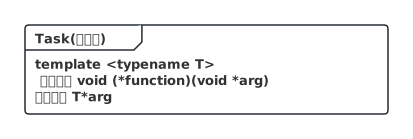
任务抽象
- 函数地址使用
void(*)(void *)类型来表示,并不影响函数的调用. 同时往往函数是常驻内存的,空间由操作系统来释放 - 参数使用指向对应类型的指针,往往任务执行完成后需要释放这部分内存空间
template<typename T>
Task<T>::Task(){
	function = nullptr;
	arg = nullptr;
}
template<typename T>
Task<T>::Task(callback function, void *arg){
	this->function = function;
	this->arg = (T*)arg;
}
- 函数地址使用
-
队列抽象
- 构造(初始化互斥锁)与析构函数(销毁互斥锁)
template<typename T>
TaskQueue<T>::TaskQueue(){
	pthread_mutex_init(&this->m_mutex, nullptr);
}

template<typename T>
TaskQueue<T>::~TaskQueue(){
	pthread_mutex_destroy(&this->m_mutex);
}

- 往任务队列内添加新任务,从队尾插入新任务(互斥锁锁定).
template<typename T>
void TaskQueue<T>::addTask(Task<T> task){
	pthread_mutex_lock(&this->m_mutex);
	this->m_taskQu.push(task);
	pthread_mutex_unlock(&this->m_mutex);
}
template<typename T>
void TaskQueue<T>::addTask(callback function, void *arg){
	pthread_mutex_lock(&this->m_mutex);
	this->m_taskQu.push({function, arg});
	pthread_mutex_unlock(&this->m_mutex);
}
- 当有新的空闲线程可用于处理任务,需要从对头中取出任务(互斥锁锁定).
template<typename T>
Task<T> TaskQueue<T>::getTask(){
	Task<T> task;
	pthread_mutex_lock(&this->m_mutex);
	if(!this->m_taskQu.empty()){
		task = this->m_taskQu.front();
		this->m_taskQu.pop();
	}
	pthread_mutex_unlock(&this->m_mutex);
	return task;
}
/*
	当队列内无任务时,会返回一个空函数.
*/
- 获取任务队列内任务数目
template<typename T>
bool TaskQueue<T>::empty(){
	return this->m_taskQu.empty();
}
template<typename T>
int TaskQueue<T>::size(){
	return this->m_taskQu.size();
}
-
线程抽象
ThreadNode::ThreadNode(){
	this->tid = 0;
	this->pre = this->next = nullptr;
}
ThreadNode::ThreadNode(pthread_t tid){
	this->tid = tid;
	this->pre = this->next = nullptr;
}
-
线程链表
- 链表的构造函数与析构函数
ThreadList::ThreadList(){
	this->m_threadList = new ThreadNode(-1);
	this->head = this->m_threadList;
	this->rear = new ThreadNode(-1);
	this->head->next = this->rear;
	this->rear->pre = this->head;
	pthread_mutex_init(&this->m_mutex, nullptr);
}
ThreadList::~ThreadList(){
	ThreadNode* cur = this->head;
	while(cur){
		ThreadNode* tp = cur->next;
		std::cout << "delete " << cur->tid << std::endl;
		delete cur;
		cur = tp;
	}
	pthread_mutex_destroy(&this->m_mutex);
}
- 往头部插入线程
ThreadNode* ThreadList::push_front(pthread_t element){
	pthread_mutex_lock(&this->m_mutex);
	ThreadNode* cur = new ThreadNode(element);
	ThreadNode* tmp = this->head->next;
	this->head->next = cur;
	tmp->pre = cur;
	cur->pre = this->head;
	cur->next = tmp;
	this->S.insert(cur);
	pthread_mutex_unlock(&this->m_mutex);
	return cur;
}
- 往尾部插入线程
ThreadNode* ThreadList::push_back(pthread_t element){
	pthread_mutex_lock(&this->m_mutex);
	ThreadNode* cur = new ThreadNode(element);
	ThreadNode* tmp = this->rear->pre;
	tmp->next = cur;
	this->rear->pre = cur;
	cur->pre = tmp;
	cur->next = this->rear;
	this->S.insert(cur);
	pthread_mutex_unlock(&this->m_mutex);
	return cur;
}
- 删除线程
void ThreadList::erase(ThreadNode *iter){
	if(this->S.find(iter) == this->S.end())	return ;
	ThreadNode* it1 = iter->pre, *it2 = iter->next;
	it1->next = it2;
	it2->pre = it1;
	this->S.erase(iter);
	delete iter;
}
- 获取当前存活线程数目
bool ThreadList::empty(){
	return this->S.size() == 0;
}

int ThreadList::size(){
	return this->S.size();
}
.png)
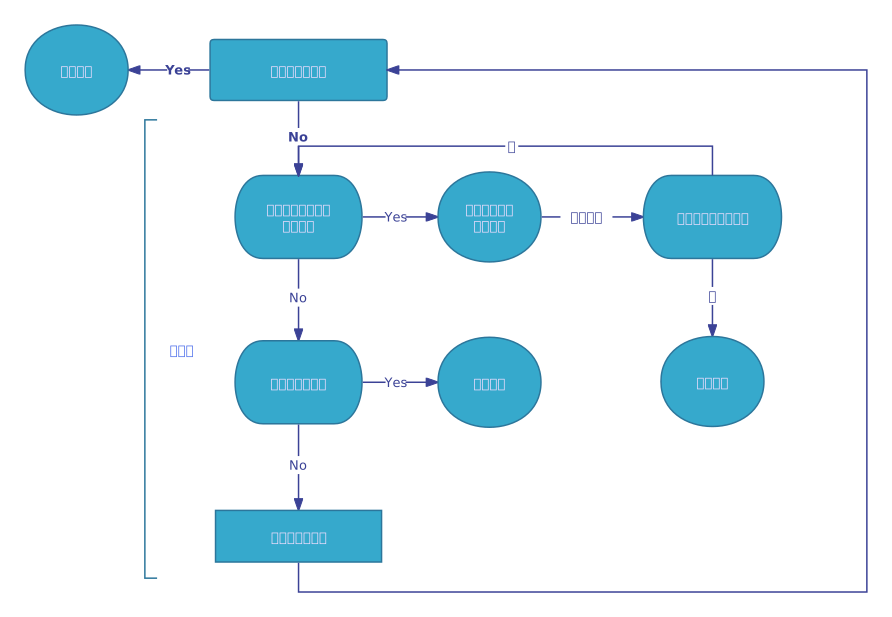
template<typename T>
void* ThreadPool<T>::worker(void *arg){
	ThreadPool* threadPool = static_cast<ThreadPool*>(arg);
	while(true){
		pthread_mutex_lock(&threadPool->threadPoolMutex);
		while(threadPool->taskQu->empty() && !threadPool->shutdown){
			pthread_cond_wait(&threadPool->notEmpty, &threadPool->threadPoolMutex);
			if(threadPool->destoryThreadCount > 0){
				threadPool->destoryThreadCount -- ;
				if(threadPool->liveThreadCount > threadPool->minThreadCount){
					threadPool->liveThreadCount -- ;
					pthread_mutex_unlock(&threadPool->threadPoolMutex);
					threadPool->threadExit();
				}
			}
		}
		if(threadPool->shutdown){
			pthread_mutex_unlock(&threadPool->threadPoolMutex);
			threadPool->threadExit();
		}
		Task<T> task = threadPool->taskQu->getTask();
		threadPool->busyThreadCount ++ ;
		pthread_mutex_unlock(&threadPool->threadPoolMutex);
		if(DEBUG)	std::cout << "Thread :" << pthread_self() << " start working..." << std::endl;
		task.function(task.arg);
		delete task.arg;
		task.arg = nullptr;
		if(DEBUG)	std::cout << "Thread :" << pthread_self() << " end working..." << std::endl;
		pthread_mutex_lock(&threadPool->threadPoolMutex);
		threadPool->workerIDs->moveToFront(threadPool->mp[pthread_self()]);
		threadPool->busyThreadCount -- ;
		pthread_mutex_unlock(&threadPool->threadPoolMutex);
	}
	return nullptr;
}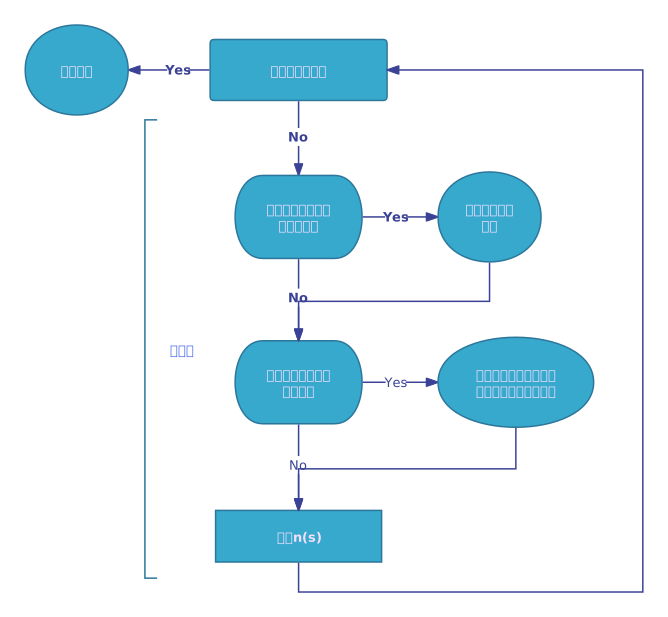
template<typename T>
void* ThreadPool<T>::manager(void *arg){
	ThreadPool* threadPool = static_cast<ThreadPool*>(arg);
	while(true){
		pthread_mutex_lock(&threadPool->threadPoolMutex);
		if(threadPool->shutdown){
			pthread_mutex_unlock(&threadPool->threadPoolMutex);
			break;
		}
		pthread_mutex_unlock(&threadPool->threadPoolMutex);
		sleep(2);
		if(threadPool->taskQu->size() >= threadPool->liveThreadCount * 0.8 && threadPool->liveThreadCount < threadPool->maxThreadCount){
			pthread_mutex_lock(&threadPool->threadPoolMutex);
			int cnt = 0;
			while(cnt < threadPool->coefficient && threadPool->workerIDs->size() < threadPool->maxThreadCount){
				cnt ++ ;
				pthread_t tid;
				pthread_create(&tid, nullptr, worker, threadPool);
				ThreadNode*cur =  threadPool->workerIDs->push_front(tid);
				threadPool->mp[tid] = cur;
				threadPool->liveThreadCount ++ ;
			}
			pthread_mutex_unlock(&threadPool->threadPoolMutex);
		}
		if(threadPool->busyThreadCount * 2 <= threadPool->liveThreadCount && threadPool->liveThreadCount > threadPool->minThreadCount){
			pthread_mutex_lock(&threadPool->threadPoolMutex);
			threadPool->destoryThreadCount = threadPool->coefficient;
			pthread_mutex_unlock(&threadPool->threadPoolMutex);
			for(int i = 0; i < threadPool->destoryThreadCount; i ++ )	pthread_cond_signal(&threadPool->notEmpty);
		}
		if(DEBUG){
			std::cout << "Busy threadCOunt : " << threadPool->busyThreadCount << std::endl;
			std::cout << "live threadCOunt : " << threadPool->liveThreadCount << std::endl;
			std::cout << "Queue size : " << threadPool->taskQu->size() << std::endl;
		}
	}
	return nullptr;
}-
线程池的构造函数
- 申请任务队列空间
- 申请工作线程链空间,创建一定数目的工作线程放入链表中
- 初始化最大线程数、最小线程数、繁忙线程数、存活线程数
- 初始化互斥锁和信号量
template<typename T>
ThreadPool<T>::ThreadPool(int minThreadCount, int maxThreadCount){
	do{
		this->taskQu = new TaskQueue<T>;
		if(this->taskQu == nullptr){
			std::cout << "任务队列内存申请失败..." << std::endl;
			break;
		}
		this->minThreadCount = minThreadCount;
		this->maxThreadCount = maxThreadCount;
		this->busyThreadCount = 0;
		this->destoryThreadCount = 0;
		this->shutdown = false;
		this->workerIDs = new ThreadList;
		if(this->workerIDs == nullptr){
			std::cout << "工作线程内存申请失败..." << std::endl;
			break;
		}
		if(pthread_mutex_init(&this->threadPoolMutex, nullptr) != 0 || pthread_cond_init(&this->notEmpty, nullptr) != 0){
			std::cout << "条件变量或互斥锁初始化失败..." << std::endl;
			break;
		}
		pthread_create(&this->managerID, nullptr, manager, this);
		for(int i = 0; i < this->minThreadCount; i ++ ){
			pthread_t tid;
			pthread_create(&tid, nullptr, worker, this);
			ThreadNode *cur =  this->workerIDs->push_front(tid);
			this->mp[tid] = cur;
		}
		this->liveThreadCount = this->minThreadCount;
		return ;
	}while(false);
	if(this->workerIDs)	delete[] this->workerIDs;
	if(this->taskQu)	delete taskQu;
}
-
线程池的析构函数
template<typename T>
ThreadPool<T>::~ThreadPool(){
	this->shutdown = true;
	pthread_join(this->managerID, nullptr);
	for(int i = 0; i < this->liveThreadCount; i ++ )	pthread_cond_signal(&this->notEmpty);
	if(this->taskQu)	delete this->taskQu;
	if(this->workerIDs)	delete this->workerIDs;
	// if(this->workerIDs)	delete[] this->workerIDs;
	pthread_mutex_destroy(&this->threadPoolMutex);
	pthread_cond_destroy(&this->notEmpty);
}
-
往线程池中添加任务
(调用任务队列添加任务接口)/* 此处不用加锁是因为"所提供的"任务队列内部自动加锁 */ template<typename T> void ThreadPool<T>::addTask(Task<T> task){ if(this->shutdown) return ; this->taskQu->addTask(task); pthread_cond_signal(&this->notEmpty); }
-
线程退出
/*
	通过线程ID来获取存储在工作者线程链中该线程的位置,再调用工作者线程链删除节点的接口,最后销毁该线程
*/
template<typename T>
void ThreadPool<T>::threadExit(){
	pthread_t tid = pthread_self();
	pthread_mutex_lock(&this->threadPoolMutex);
	this->workerIDs->erase(this->mp[tid]);
	this->mp.erase(tid);
	pthread_mutex_unlock(&this->threadPoolMutex);
	pthread_exit(NULL);
}